
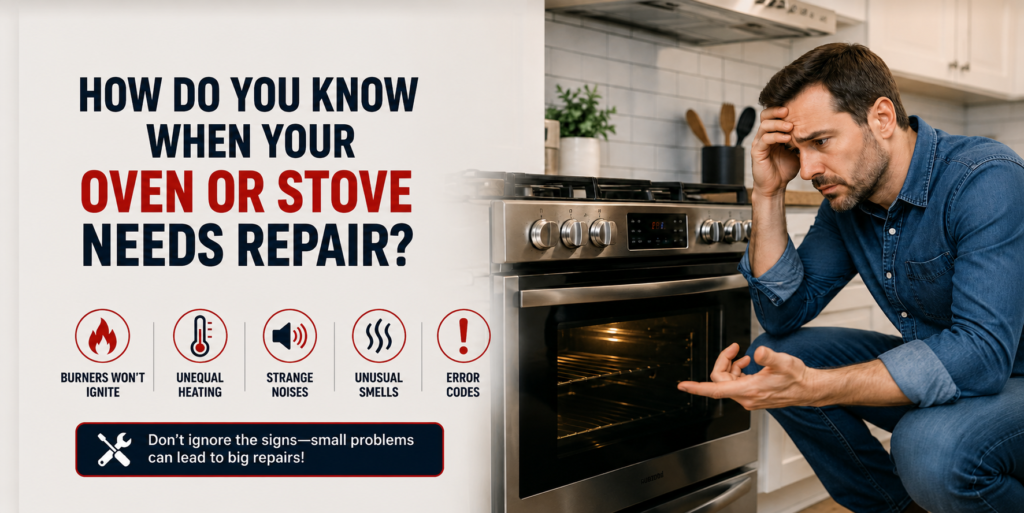
Your oven and stove are among the most frequently used appliances in your kitchen. Whether you’re preparing a quick breakfast or cooking a family dinner, you rely on them to perform consistently. When they begin acting differently, ignoring the warning signs can lead to bigger repairs, higher energy bills, or even safety risks.
Quick Answer: You know your oven or stove needs repair if it heats unevenly, won’t turn on, takes too long to cook food, produces unusual smells, makes strange noises, has faulty burners, displays error codes, or trips your electrical breaker. Addressing these issues early can prevent more expensive repairs and improve appliance safety.
What Does It Mean When Your Oven or Stove Needs Repair?
An oven or stove needs repair when one or more components stop functioning properly, reducing cooking performance or creating a safety concern. Common faulty parts include heating elements, igniters, thermostats, temperature sensors, control boards, burner switches, and electrical wiring.
Some problems develop gradually, while others happen without warning. Knowing the early signs helps you avoid complete appliance failure.
What Are the Most Common Signs Your Oven or Stove Needs Repair?
1. Your Oven Isn’t Heating Properly
If your oven struggles to reach the desired temperature or never gets hot enough, meals may cook unevenly or require much longer than usual.
Possible causes include:
- Burned-out heating element
- Faulty igniter
- Defective temperature sensor
- Malfunctioning thermostat
Consistent temperature problems usually require professional diagnosis.
2. Food Cooks Unevenly
If one side of your casserole burns while the other remains undercooked, your oven may not be distributing heat correctly.
This often happens because of:
- Failing convection fan
- Damaged bake element
- Faulty temperature calibration
Uneven cooking wastes food and makes baking frustrating.
3. Burners Won’t Ignite or Heat Correctly
Electric burners may remain cold, while gas burners may click repeatedly without lighting.
Common reasons include:
- Dirty burner ports
- Broken ignition switch
- Faulty spark module
- Worn burner element
If you smell gas without ignition, stop using the appliance immediately and seek professional assistance.
Why Is My Oven Taking Longer to Cook Food?
When cooking times suddenly increase, your oven may not be maintaining the correct internal temperature.
Instead of simply increasing the cooking time, have the appliance inspected. A weak heating element or inaccurate thermostat often causes this issue and can increase electricity or gas consumption over time.
Should I Be Concerned About Strange Smells or Noises?
Yes. Unusual smells or sounds should never be ignored.
Common Odors
- Burning plastic smell
- Electrical burning odor
- Persistent gas smell
- Smoke during normal cooking
Common Sounds
- Loud buzzing
- Clicking that won’t stop
- Popping noises
- Electrical humming
While a new oven may produce a temporary odor during its first use, recurring smells or noises usually indicate a developing problem.
What Happens If You Ignore Oven or Stove Problems?
Delaying repairs can create larger and more expensive issues.
| Problem | What Can Happen If Ignored |
|---|---|
| Uneven heating | Burned or undercooked food |
| Faulty burner | Complete burner failure |
| Electrical issues | Blown fuses or damaged wiring |
| Gas ignition problems | Increased safety risks |
| Broken thermostat | Higher energy bills |
Scheduling repairs early is usually more affordable than replacing major components later.
Should You Repair or Replace Your Oven or Stove?
The right decision depends on the appliance’s age, condition, and repair cost.
Repair Is Often the Better Choice If:
- The appliance is less than 10 years old.
- Only one component has failed.
- Repair costs are significantly lower than replacement.
- The appliance has been reliable until recently.
Replacement May Be Worth Considering If:
- Repairs become frequent.
- Multiple major parts have failed.
- The appliance is over 15 years old.
- Repair costs approach half the price of a new unit.
An experienced technician can help you determine the most cost-effective option.
How Can You Prevent Future Oven and Stove Repairs?
Routine maintenance extends appliance life and improves performance.
Here are a few simple habits:
- Clean spills promptly.
- Avoid slamming the oven door.
- Keep burner ports free of grease.
- Check door seals regularly.
- Don’t overload the oven.
- Schedule professional inspections if performance changes.
Preventive maintenance often catches small problems before they become expensive repairs.
Why Choose Professional Oven and Stove Repair?
Modern cooking appliances contain electronic controls, gas connections, sensors, and high-voltage components. Attempting DIY repairs without the proper tools or knowledge can be dangerous.
Professional technicians can:
- Diagnose the exact problem quickly.
- Replace defective parts correctly.
- Verify safe operation.
- Restore proper cooking performance.
- Help extend appliance lifespan.
At Chicago Appliance Repair and Installation, we provide reliable oven and stove repair services throughout Chicago and the surrounding suburbs. Our experienced technicians diagnose problems accurately and work efficiently to get your kitchen back to normal as quickly as possible.
Conclusion
Knowing how to know when your oven or stove needs repair can save you time, money, and frustration. Warning signs such as uneven heating, faulty burners, strange smells, unusual noises, or longer cooking times shouldn’t be ignored. Prompt repairs help prevent bigger issues, improve safety, and keep your appliance performing efficiently. If your oven or stove is showing any of these symptoms, Chicago Appliance Repair and Installation is ready to provide dependable repair services across Chicago and the suburbs.
Frequently Asked Questions
How do I know if my oven heating element is bad?
If your oven takes much longer to heat, fails to reach the correct temperature, or the heating element appears blistered, cracked, or doesn’t glow evenly, the heating element may have failed. A professional inspection can confirm the issue and replace the damaged part safely.
Why does my stove burner keep turning off while cooking?
This may be caused by a faulty burner element, damaged switch, loose electrical connection, or overheating protection system. If the problem happens repeatedly, it’s best to have the appliance professionally diagnosed before the issue worsens.
Is it worth repairing an oven that's 10 years old?
In many cases, yes. If the repair involves replacing a single component and the overall appliance is in good condition, repairing a 10-year-old oven is often more economical than buying a new one.
Why does my oven smell like it's burning?
Food residue is a common cause, but persistent burning smells can also indicate damaged wiring, overheating components, or failing electrical parts. If cleaning doesn’t eliminate the odor, stop using the appliance until it has been inspected.
Can a faulty oven increase my energy bills?
Yes. A malfunctioning thermostat, heating element, or temperature sensor forces the appliance to work longer to maintain cooking temperatures, increasing electricity or gas consumption over time.
. How often should an oven or stove be professionally serviced?
Most homeowners don’t require annual servicing, but if your appliance is older or used heavily, having it inspected every one to two years can identify worn components before they fail and help maintain safe operation.
When should I stop using my oven or stove immediately?
Stop using the appliance if you smell gas, notice sparks, see smoke coming from electrical components, experience repeated breaker trips, or hear loud electrical buzzing. These symptoms may indicate a serious safety issue that requires immediate professional attention.
If you need emergency oven or stove repair services, please call us directly at (872) 250-4424 to schedule same day appointment.