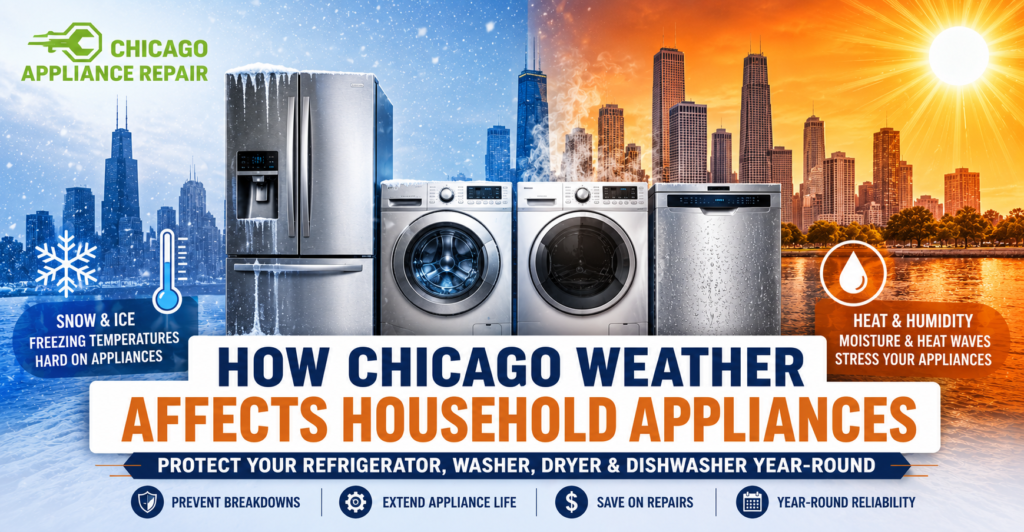
Chicago homeowners are no strangers to extreme weather conditions. From freezing winters and heavy snowfall to humid summers and sudden temperature swings, the city’s climate can place significant stress on household appliances. While most homeowners think about weather-related damage to roofs, windows, and vehicles, appliances often suffer hidden wear and tear throughout the year.
Understanding how Chicago’s weather affects your appliances can help you prevent costly breakdowns, improve efficiency, and extend appliance lifespan.
Why Chicago’s Climate Is Tough on Appliances
Chicago experiences four distinct seasons with dramatic temperature changes. Winter temperatures frequently drop below freezing, while summer humidity levels can become uncomfortable. These fluctuations impact appliance components, electrical systems, water lines, and ventilation systems.
Common weather-related appliance issues include:
- Frozen or damaged water lines
- Increased compressor strain
- Condensation buildup
- Electrical component failures
- Rust and corrosion
- Reduced appliance efficiency
Regular maintenance can significantly reduce these risks.
How Winter Weather Impacts Household Appliances
Refrigerators and Freezers
Many Chicago homeowners keep refrigerators or freezers in garages or basements. During extremely cold weather, appliance thermostats can become confused by surrounding temperatures.
Potential problems include:
- Inconsistent cooling performance
- Frozen food in refrigerator compartments
- Compressor malfunctions
- Increased energy consumption
Keeping appliances in temperature-controlled spaces helps maintain proper operation.
Washing Machines
Chicago winters can be particularly harsh on washing machines.
Common winter issues include:
- Frozen water supply lines
- Cracked hoses
- Reduced water pressure
- Drainage problems
If a water line freezes and bursts, homeowners may face costly water damage in addition to appliance repairs.
Dishwashers
Dishwashers rely on stable water temperatures and proper drainage. Cold weather can impact plumbing systems, causing:
- Slow filling cycles
- Poor cleaning performance
- Drain pump strain
- Water flow issues
If your dishwasher is not draining properly, consider scheduling professional dishwasher repair before the problem worsens.
How Summer Heat and Humidity Affect Appliances
Refrigerators
During Chicago’s humid summers, refrigerators work much harder to maintain safe food temperatures.
Common problems include:
- Overworked compressors
- Condenser coil overheating
- Excessive energy usage
- Premature component wear
Cleaning condenser coils regularly helps improve efficiency and reduce strain.
Dryers
High humidity makes dryers work longer to remove moisture from clothing.
Potential issues include:
- Longer drying times
- Increased utility bills
- Excess lint accumulation
- Ventilation problems
Regular dryer vent cleaning is especially important during humid months.
Ice Makers and Water Dispensers
Humidity can affect water systems and increase condensation around ice makers.
Homeowners may notice:
- Ice clumping
- Reduced ice production
- Water leaks
- Mold growth near water components
Routine inspections can prevent more serious issues.
Temperature Swings and Appliance Performance
Chicago’s rapid weather changes can be especially hard on appliance components.
Electrical Components
Sudden temperature fluctuations cause materials to expand and contract repeatedly. Over time, this can damage:
- Control boards
- Wiring connections
- Sensors
- Electronic displays
Modern appliances contain sophisticated electronics that are particularly sensitive to environmental stress.
Rubber Seals and Gaskets
Appliance door seals help maintain efficiency and proper operation.
Temperature extremes can cause:
- Cracking
- Shrinking
- Moisture leaks
- Air leaks
Damaged seals force appliances to work harder and consume more energy.
How to Protect Your Appliances Year-Round
Chicago homeowners can reduce weather-related appliance problems by following a few simple maintenance practices:
1. Schedule Preventive Maintenance
Professional inspections can identify issues before they become expensive repairs.
2. Check Water Lines Regularly
Inspect washing machine, dishwasher, and refrigerator water lines for signs of wear or freezing damage.
3. Clean Appliance Vents and Coils
Proper airflow improves efficiency and reduces component stress.
4. Monitor Appliance Performance
Unusual noises, longer cycle times, or inconsistent temperatures often indicate developing problems.
5. Address Repairs Quickly
Small issues can escalate into major appliance failures when ignored.
Related Blog: “Emergency Appliance Repair in Chicago & Suburbs: What to Do Before Calling a Technician”
When to Call a Professional Appliance Repair Technician
If your appliance shows signs of weather-related damage, professional diagnosis can prevent further complications.
Call for service if you notice:
- Water leaks
- Excessive frost buildup
- Appliances not cooling properly
- Unusual noises
- Frequent error codes
- Increased energy consumption
Prompt repairs often cost less than replacing an entire appliance.
Conclusion
Chicago’s unique climate creates challenges for homeowners throughout the year. Extreme cold, high humidity, and sudden temperature swings can all affect appliance performance and longevity. By understanding these risks and performing routine maintenance, homeowners can reduce breakdowns and extend the life of their appliances.
When appliance issues arise, professional repair services can help restore performance and prevent costly future damage.
Frequently Asked Questions
How does cold weather affect refrigerators in Chicago?
Extremely cold temperatures can interfere with thermostat operation, causing refrigerators to cool improperly or freeze food unexpectedly.
Can Chicago winters damage washing machines?
Yes. Frozen water lines, cracked hoses, and drainage issues are common winter-related washing machine problems.
Why does my dryer take longer during summer?
Chicago’s summer humidity increases moisture levels in clothing, requiring longer drying cycles and putting additional strain on dryers.
Does weather affect appliance lifespan?
Yes. Extreme temperatures, humidity, and rapid weather changes can accelerate wear on appliance components and reduce overall lifespan.
How often should appliances be serviced in Chicago?
Most appliances should be professionally inspected annually to identify weather-related wear and prevent unexpected breakdowns.
What household appliance is most affected by Chicago weather?
Refrigerators, washing machines, dryers, and dishwashers are among the appliances most commonly impacted by Chicago’s changing weather conditions.