Quick answer:
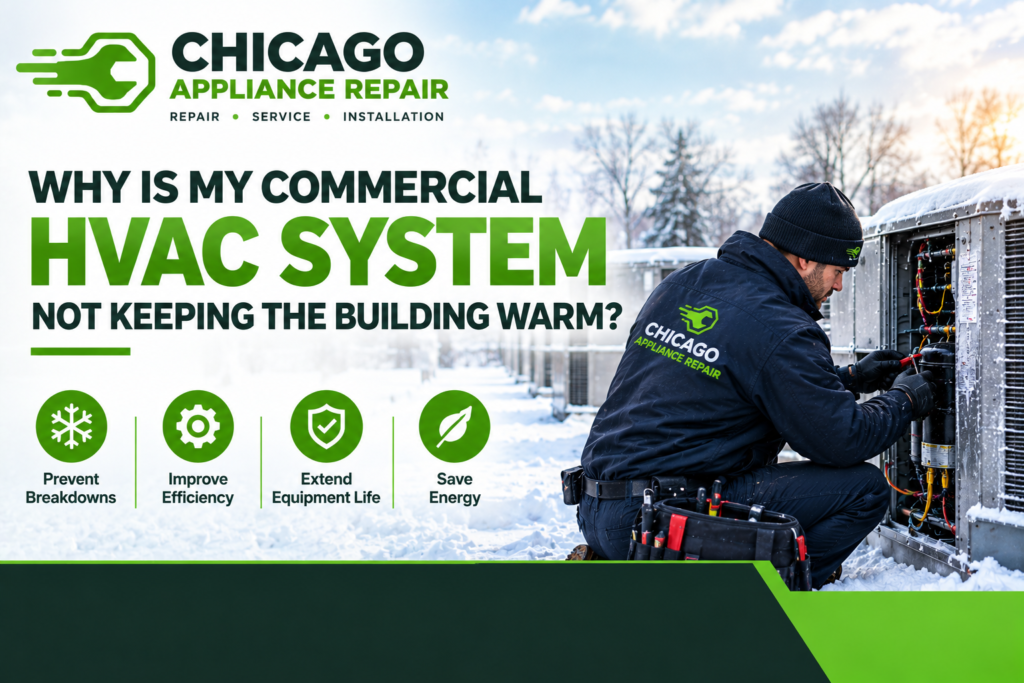
A commercial building may stay cold because of dirty air filters, faulty thermostats, blocked vents, malfunctioning heating components, ductwork leaks, or inadequate heating capacity. Check thermostat settings and visible airflow restrictions first. If the system continues running without producing enough heat, schedule an inspection with a qualified HVAC technician.
What Causes a Commercial HVAC System Not to Keep the Building Warm?
Several problems can prevent a commercial heating system from maintaining a comfortable indoor temperature. The most likely cause depends on the equipment type, building layout, and symptoms you notice.
1. Are Dirty Air Filters Restricting Airflow?
Air filters collect dust and airborne debris. When they become clogged, airflow can drop, making it harder for a furnace or air handler to distribute heated air throughout the building.
What to do: Inspect accessible filters and replace them according to the manufacturer’s recommendations. Commercial properties with high occupancy or dusty environments may need more frequent filter checks.
2. Is the Thermostat Causing Heating Problems?
Incorrect thermostat settings, poor placement, calibration issues, or faulty sensors can prevent the system from heating properly. For example, a thermostat near a sunny window may register a warmer temperature than employees experience elsewhere in the building.
What to do: Confirm the thermostat is set to heating mode and the target temperature is appropriate. Check schedules and programmed setbacks. If the temperature reading seems inaccurate, have a technician inspect the controls.
3. Are Ductwork Leaks or Blocked Vents Losing Heat?
Ductwork carries conditioned air from the HVAC equipment to occupied spaces. Leaks, damaged insulation, closed dampers, or blocked supply vents can reduce the amount of heat reaching offices and other rooms.
This is particularly noticeable in larger Chicago commercial buildings, where one wing may feel comfortable while another remains cold.
What to do: Check accessible vents for obstructions and note which rooms receive weak airflow. Ask an HVAC professional to inspect ductwork, dampers, and airflow balance.
4. Could the Heating Equipment Have a Mechanical Fault?
A commercial furnace, rooftop unit, or heat pump may operate without delivering sufficient heat when an important component malfunctions.
Potential issues include ignition problems, failed sensors, blower motor faults, refrigerant-related problems in heat pumps, or control board failures. Some systems may also shut down repeatedly because a safety control detects an unsafe operating condition.
Do not bypass safety switches or attempt repairs involving gas, electrical components, or refrigerant. A qualified technician can diagnose the fault and recommend the appropriate repair.
How Can Chicago Businesses Troubleshoot a Cold Building?
Before arranging service, facility managers can perform a few basic checks without opening equipment panels or handling hazardous components.
Check the thermostat: Verify the heating mode, temperature setting, schedule, and any displayed error messages.
Inspect accessible filters: Replace dirty filters using the correct size and specification.
Look for blocked vents: Move furniture, boxes, or other obstructions away from supply and return grilles.
Compare room temperatures: Record which areas are cold and whether the problem affects the entire building.
Check for unusual operation: Note short cycling, unusual noises, weak airflow, or a system that runs continuously.
Review recent changes: Consider recent construction, occupancy changes, thermostat adjustments, or maintenance work.
These observations can help a technician diagnose the issue faster. If you smell gas, suspect carbon monoxide, or notice smoke or electrical burning, leave the affected area as appropriate and contact emergency services or the relevant utility. Do not continue troubleshooting an unsafe system.
Is Your Commercial HVAC System Undersized for the Building?
Sometimes the equipment is working as designed but cannot meet the building’s heating demand. This can happen after an expansion, a change in occupancy, new ventilation requirements, or modifications to the building envelope.
Heating capacity is the amount of heat equipment can deliver under specified conditions. A proper load calculation considers factors such as floor area, insulation, windows, outdoor temperatures, air leakage, ventilation, and internal heat gains.
For example, a warehouse that adds office space or increases outdoor-air ventilation may need a revised heating assessment. Simply installing a larger unit without evaluating the building can create uneven temperatures and inefficient operation.
A qualified HVAC contractor can assess the heating load, equipment condition, airflow, and control settings before recommending replacement or upgrades.
How Does Chicago’s Winter Weather Affect Commercial Heating?
Chicago’s cold winters place additional demand on commercial heating equipment. Low outdoor temperatures can expose weaknesses in insulation, weatherstripping, air distribution, and system capacity.
Heat pumps may also need to work harder in cold conditions, depending on their design and operating limits. Buildings with frequently opened loading doors can lose substantial heat, while poorly sealed windows may create cold spots near exterior walls.
To reduce heat loss:
Inspect door seals and weatherstripping.
Address damaged window seals and obvious drafts.
Keep loading doors closed when practical.
Maintain filters and schedule preventive HVAC inspections.
Review building temperatures and energy use for unusual changes.
These measures support heating performance, but they cannot replace repairs to faulty equipment.
When Should You Call a Commercial Heating Professional?
Arrange professional service if the building remains cold after basic checks, the heating system repeatedly shuts down, or some areas receive little or no warm air. Rising energy bills, unusual equipment noises, persistent temperature swings, and recurring error codes also deserve attention.
Chicago Appliance Repair and Installation serves Chicago and its suburbs. For help with an appropriate heating or HVAC concern, visit https://chicagoappliancefix.com/ to review our services and contact options. For related maintenance advice, see our appliance repair blog.
Service note: Confirm that commercial HVAC heating equipment is within the company’s current service scope before booking. Commercial rooftop units, boilers, and gas-fired systems may require a specialist with the appropriate licensing and experience.
Conclusion
If your commercial HVAC system is not keeping the building warm, start by checking thermostat settings, accessible filters, and blocked vents. Persistent cold spots, weak airflow, repeated shutdowns, and rising energy costs may indicate a deeper issue with ductwork, controls, heating components, or equipment capacity.
Addressing the cause early can help protect comfort and reduce avoidable operating costs. For Chicago-area businesses, a qualified HVAC professional can inspect the system, identify the source of the problem, and recommend practical next steps.
Frequently Asked Questions
Why is my commercial HVAC system running but not heating?
A system can run without producing enough heat because of restricted airflow, incorrect thermostat settings, a faulty ignition system, malfunctioning heating components, or ductwork leaks. Check accessible filters and thermostat settings first. If the equipment continues running while indoor temperatures remain low, arrange a professional inspection rather than attempting internal repairs.
Why is one room colder than the rest of my commercial building?
Uneven temperatures can result from unbalanced airflow, closed dampers, leaking ducts, poor insulation, or differences in sunlight and exterior exposure. Record which rooms are affected and whether airflow feels weaker there. A technician can assess the ductwork, dampers, and system balancing to identify why certain spaces are not receiving enough heat.
Can a dirty air filter stop a commercial building from getting warm?
Yes. A heavily clogged filter can restrict airflow and reduce heating performance. Depending on the equipment, restricted airflow may also cause overheating or trigger a safety shutdown. Inspect filters according to the manufacturer’s instructions and replace them when needed. If heating does not improve, other airflow or equipment problems may be responsible.
Why does my commercial heater keep turning on and off?
Frequent cycling can be caused by thermostat problems, restricted airflow, control faults, overheating, or equipment sizing issues. In some cases, a safety device is stopping the system because it detects an abnormal condition. Avoid repeatedly resetting equipment to keep it running. A technician should identify the underlying cause and verify safe operation.
Does Chicago's cold weather affect commercial HVAC performance?
Yes. Low outdoor temperatures increase building heat loss and can place additional demand on heating equipment. Heat pump performance also depends on the system’s design and outdoor operating conditions. Proper maintenance, effective insulation, sealed exterior openings, and suitable equipment capacity help commercial buildings maintain more consistent indoor temperatures during Chicago winters.
How often should a commercial HVAC system be maintained?
Maintenance frequency depends on the equipment, operating hours, building conditions, and manufacturer’s recommendations. Many commercial properties benefit from scheduled inspections before the heating season, along with regular filter checks and routine servicing throughout the year. Buildings with heavy occupancy or continuous operation may require more frequent attention.
When should I replace a commercial heating system instead of repairing it?
Replacement may be worth evaluating when equipment experiences repeated failures, repair costs continue to rise, heating capacity is inadequate, or efficiency has declined significantly. However, a cold building does not automatically mean the unit needs replacing. A qualified contractor should evaluate the equipment, repair options, operating costs, and building heating load before recommending a decision.
If you need emergency commercial hvac repair services, please call us directly at (872) 250-4424 to schedule same day appointment.