Quick answer:
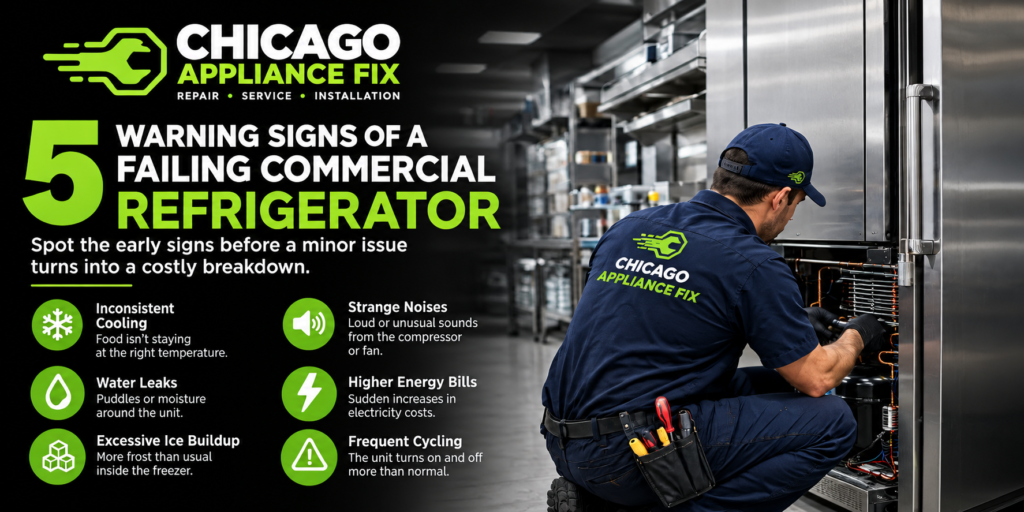
The most common warning signs of a failing commercial refrigerator are inconsistent temperatures, unusual noises, excessive frost, water leaks, and a refrigerator that runs continuously. These symptoms can point to problems with airflow, door seals, fans, thermostats, condenser coils, drainage, or other refrigeration components that require professional attention.
What are the warning signs of a failing commercial refrigerator?
1. Is your commercial refrigerator struggling to maintain temperature?
Temperature inconsistency is one of the clearest warning signs of a failing commercial refrigerator. If food feels warmer than usual or the displayed temperature keeps fluctuating, the equipment may not be cooling efficiently.
Several issues can contribute to temperature problems, including a dirty condenser, blocked airflow, a faulty thermostat, damaged door gasket, overloaded shelves, or a refrigeration-system fault.
What should you do?
- Check the internal temperature with a reliable thermometer.
- Make sure air vents are not blocked by food containers.
- Check that the refrigerator door closes completely.
- Record unusual temperature fluctuations.
- Arrange professional inspection if the problem continues.
For a restaurant in Chicago, catching a cooling problem during a busy service period can make the difference between a manageable repair and significant food loss.
Why is my commercial refrigerator making unusual noises?
Commercial refrigeration equipment naturally produces operating sounds, but a sudden change in noise should not be ignored.
Grinding, scraping, repeated clicking, loud buzzing, or excessive vibration may indicate an issue with a fan motor, compressor, mounting component, or ice buildup around a moving part.
For example, a restaurant manager may notice a freezer becoming unusually loud during the afternoon. If the noise is caused by ice contacting an evaporator fan, continuing to operate the equipment without diagnosis could eventually affect airflow and cooling performance.
Expert tip: Don’t judge a refrigeration problem solely by whether the unit is still cooling. A refrigerator can continue operating while an internal component is already deteriorating.
What noises should you watch for?
- Grinding or scraping
- Repeated clicking
- Loud buzzing
- Excessive rattling
- Unusual vibration
- Fans that suddenly become louder
Can excessive frost mean a commercial refrigerator is failing?
Yes. Excessive frost or ice accumulation can be a warning sign, particularly when it repeatedly returns after being removed.
Frost buildup can restrict airflow and reduce cooling efficiency. Potential causes include a damaged door gasket, excessive moisture entering the cabinet, a defrost-system problem, or inadequate airflow.
A busy commercial kitchen may open refrigerator doors dozens of times during a shift, but persistent heavy ice formation should still be investigated rather than treated as normal operating behavior.
Why is my commercial refrigerator leaking water?
Water pooling inside or underneath a commercial refrigerator can indicate a blocked drain, damaged drain line, excessive condensation, or a defrost-related issue.
A leak should not be ignored simply because the refrigerator continues cooling. Water can create slip hazards, damage flooring, and potentially reach electrical components.
If you notice water:
- Keep the surrounding floor dry.
- Check whether the refrigerator door is sealing properly.
- Look for obvious drain blockage without dismantling components.
- Monitor whether the leak returns.
- Contact a qualified commercial appliance technician if the problem persists.
For additional appliance-care information, explore our commercial appliance repair blog.
Why does my commercial refrigerator run constantly?
A refrigerator that appears to run continuously may be working harder than necessary. Constant operation can increase energy consumption and may indicate that the equipment is struggling to reach its target temperature.
Possible causes include:
- Dirty condenser coils
- Poor ventilation
- Damaged door seals
- Excessive frost
- Faulty fans
- Incorrect temperature settings
- Refrigeration-system problems
If the compressor is running almost continuously while the refrigerator remains too warm, professional diagnosis is recommended.
Should you repair or replace a failing commercial refrigerator?
Not every refrigeration problem means the equipment needs to be replaced. The appropriate solution depends on the refrigerator’s age, condition, repair history, efficiency, availability of parts, and the nature of the failure.
| Situation | What to Consider |
|---|---|
| Minor component failure | Repair may be practical |
| Damaged door gasket | Usually repairable |
| Blocked drain or airflow | Cleaning or service may resolve it |
| Repeated major failures | Compare repair and replacement costs |
| Older inefficient equipment | Evaluate long-term operating costs |
The advantage of repairing suitable equipment is that you may extend its useful life without the upfront cost of replacement. However, repeatedly repairing an older refrigerator can become less economical if major components continue to fail.
A professional technician can inspect the equipment and explain the available options rather than relying on guesswork.
What should you do when your commercial refrigerator starts failing?
Start by documenting the symptoms. Check the actual internal temperature, note unusual sounds, look for frost or water, and determine whether the unit is running more frequently than normal.
Do not attempt electrical, compressor, refrigerant, or other complex refrigeration repairs yourself. These systems require appropriate tools, training, and diagnostic procedures.
If you need professional appliance assistance, Chicago Appliance Repair and Installation serves businesses and customers throughout Chicago and surrounding suburbs.
Our commercial refrigerator repair service can help identify the underlying problem and determine the appropriate repair approach.
How can Chicago businesses prevent commercial refrigerator problems?
Routine maintenance can help identify developing problems before they cause an unexpected shutdown. Keep condenser areas clean, maintain adequate ventilation, inspect door gaskets, avoid blocking internal vents, and monitor temperatures regularly.
Staff should also know what abnormal operation looks like. A refrigerator that suddenly becomes noisy, warm, wet, or heavily frosted deserves attention rather than being left until it stops working.
Frequently Asked Questions
What are the most common warning signs of a failing commercial refrigerator?
The most common warning signs include inconsistent temperatures, unusual operating noises, excessive frost, water leaks, and continuous operation. Other clues can include damaged door seals, poor airflow, or food that is not staying as cold as it normally does. Identifying these symptoms early can help a business arrange diagnosis before the equipment experiences a complete breakdown.
Why is my commercial refrigerator not staying cold?
A commercial refrigerator may fail to maintain temperature because of restricted airflow, dirty condenser coils, a damaged door gasket, faulty thermostat, fan problems, excessive frost, or a refrigeration-system issue. Check that vents are unobstructed and the door seals properly. If temperatures remain inconsistent, professional diagnosis can identify the underlying cause.
Is it normal for a commercial refrigerator to run all day?
Commercial refrigerators can operate frequently, particularly in busy kitchens where doors are opened often. However, a unit that runs almost continuously while struggling to maintain its target temperature may have an underlying problem. Dirty coils, poor ventilation, damaged seals, airflow restrictions, and mechanical faults can all contribute to excessive operation.
Why is my commercial refrigerator making a loud buzzing or grinding noise?
Unusual buzzing, grinding, scraping, rattling, or vibration can indicate a problem with a fan, compressor, mounting component, or ice buildup. Some operating noise is normal, but a noticeable change should be investigated. Continuing to operate equipment with a developing mechanical problem can sometimes lead to more extensive damage or downtime.
How often should a commercial refrigerator be professionally serviced?
Service frequency depends on the equipment type, operating environment, workload, manufacturer’s recommendations, and maintenance history. High-volume restaurants may need more frequent inspections than lower-use businesses. Regular checks should include temperature performance, condenser condition, airflow, door gaskets, fans, and other critical refrigeration components.
Can a commercial refrigerator be repaired instead of replaced?
Yes, many commercial refrigerator problems can be repaired. Whether repair makes financial sense depends on the equipment’s age, condition, repair history, parts availability, energy efficiency, and estimated repair cost. A professional inspection can help determine whether repairing the existing unit or investing in replacement equipment is the more practical long-term approach.
What should I do if my commercial refrigerator suddenly stops cooling?
First, verify the temperature with an independent thermometer and check that the unit has power. Keep the refrigerator closed as much as possible and follow your food-safety procedures for protecting perishable inventory. Avoid attempting complex refrigeration repairs yourself. Arrange professional service promptly to determine why the equipment has stopped cooling.
Conclusion
Recognizing the warning signs of a failing commercial refrigerator can help Chicago businesses respond before a refrigeration problem turns into spoiled inventory or unexpected downtime. Temperature fluctuations, unusual noises, excessive frost, water leaks, and constant operation all deserve attention.
Regular maintenance and timely professional diagnosis can help identify developing equipment problems and determine whether a repair is appropriate. For businesses in Chicago and the surrounding suburbs, addressing refrigeration issues early can help keep essential equipment operating reliably.
If you need emergency commercial refrigeration repair services, please call us directly at (872) 250-4424 to schedule same day appointment.