When a major appliance suddenly stops working, it can disrupt your entire day. Whether your refrigerator stops cooling, your washer won’t drain, or your oven refuses to heat, quick action can help prevent further damage and reduce repair costs. Before scheduling emergency appliance repair in Chicago, there are several important steps homeowners can take safely at home.
Understanding what to check before calling a technician can help identify simple issues, improve appliance safety, and provide useful information to the repair professional.
Check the Power Supply First
One of the most common reasons appliances stop working is a power issue. Before assuming the appliance has failed, inspect the basics:
- Make sure the appliance is plugged in securely
- Check for tripped circuit breakers
- Test the outlet with another device
- Look for damaged power cords
In many Chicago homes, especially older properties, overloaded circuits can temporarily shut off power to kitchen or laundry appliances.
Inspect for Error Codes or Warning Lights
Modern appliances from brands like Samsung, LG, Whirlpool, GE, and Bosch often display error codes when a problem occurs. These codes can help narrow down the issue before contacting a technician.
Common appliance warning signs include:
- Flashing lights
- Beeping sounds
- Digital error messages
- Unusual shutdown cycles
Write down the code or take a photo before restarting the appliance. This information can speed up diagnosis during an emergency appliance repair visit.
Turn Off Water Supply for Leaking Appliances
If your dishwasher, refrigerator, or washing machine is leaking water, immediately turn off the water supply valve to prevent additional damage to floors and cabinets.
Water leaks can quickly become serious, especially in condos and apartments throughout Chicago where water damage may affect neighboring units.
Signs of emergency leaks include:
- Pooled water around the appliance
- Dripping hoses
- Water under the refrigerator
- Overflowing washing machines
Avoid using the appliance again until it has been inspected professionally.
Clean Air Vents and Filters
Restricted airflow is another common cause of appliance malfunction. Dirty vents and clogged filters can cause overheating and poor performance.
Before scheduling service, check:
- Refrigerator condenser coils
- Dryer lint filters
- Dishwasher filters
- Oven ventilation areas
Chicago homeowners often experience increased dust buildup during seasonal weather changes, which can impact appliance efficiency.
Listen for Unusual Sounds
Strange noises can indicate internal mechanical issues. Different sounds often point to different problems.
Common appliance noises include:
- Grinding from washers or dryers
- Buzzing refrigerators
- Clicking ovens
- Loud dishwasher humming
If the sound becomes louder or continuous, stop using the appliance immediately to avoid further damage.
Avoid DIY Repairs on Major Components
While basic troubleshooting is helpful, attempting complex appliance repairs without proper tools can worsen the issue or create safety risks.
Avoid handling:
- Compressors
- Gas lines
- Electrical wiring
- Control boards
- Refrigerant systems
Professional technicians have specialized diagnostic tools and manufacturer knowledge to safely repair modern appliances.
- If you need fast local help, visit the appliance repair service page on Chicago Appliance Fix for professional assistance.
Common Appliance Emergencies in Chicago Homes
Emergency appliance repair calls in Chicago often involve:
- Refrigerators not cooling
- Dryers overheating
- Washers leaking water
- Ovens not heating
- Dishwashers not draining
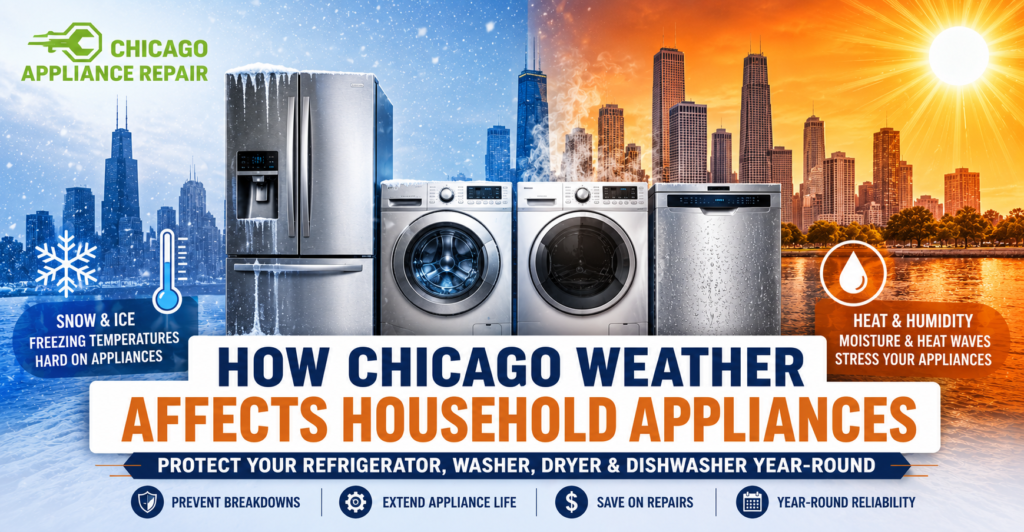
Seasonal temperature changes in Illinois can also affect appliance performance, particularly refrigerators and HVAC-connected appliances.
For more maintenance insights, read our related guide:
“Why Your Dryer Takes Too Long to Dry Clothes.”
When You Should Call an Emergency Appliance Technician
You should contact a professional immediately if you notice:
- Burning smells
- Smoke or sparks
- Gas odors
- Electrical shocks
- Water flooding
- Complete appliance failure
These issues can become dangerous if ignored.
A licensed appliance repair technician can diagnose the issue quickly and recommend whether repair or replacement is the better option.
Preventing Future Appliance Emergencies
Routine maintenance can significantly reduce emergency breakdowns.
Helpful maintenance tips:
- Clean refrigerator coils every 6 months
- Empty dryer lint traps after every load
- Avoid overloading washers
- Inspect hoses and seals regularly
- Schedule annual appliance inspections
Preventive care helps extend appliance lifespan and improves energy efficiency.
FAQs About Emergency Appliance Repair in Chicago
What qualifies as an appliance repair emergency?
Appliance emergencies include gas leaks, electrical burning smells, water leaks, smoking appliances, or refrigerators that stop cooling completely.
Should I unplug a broken appliance?
Yes. If the appliance shows signs of electrical issues, smoke, sparks, or overheating, unplug it immediately if safe to do so.
Can power outages damage appliances?
Yes. Sudden power surges during storms or outages in Chicago can damage electronic control boards and appliance components.
Is same-day appliance repair available in Chicago?
Many professional appliance repair companies in Chicago offer same-day or emergency repair services depending on technician availability.
How much does emergency appliance repair cost?
Costs vary depending on the appliance type, replacement parts, and severity of the issue. Diagnostic fees are usually charged before repairs begin.
Is it worth repairing older appliances?
In many cases, yes. If the repair cost is less than half the replacement cost and the appliance is under 10 years old, repair is often worthwhile.