Quick Answer:
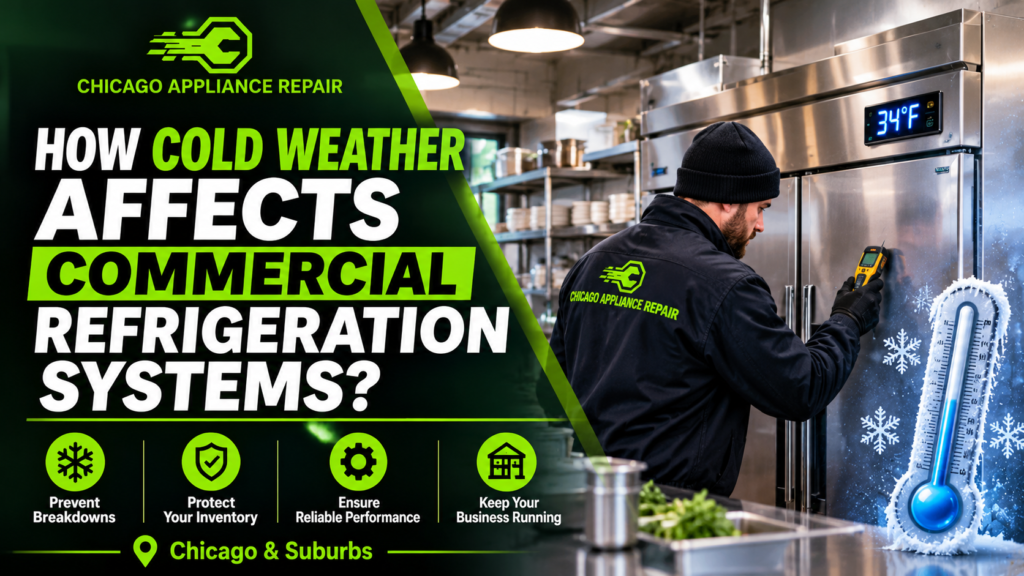
Cold weather can affect commercial refrigeration systems by changing operating pressures, reducing condenser efficiency, affecting refrigerant flow, and interfering with temperature controls. Outdoor condensing units are particularly vulnerable to freezing conditions. Without proper winter maintenance and system adjustments, businesses may experience temperature fluctuations, equipment malfunctions, and unnecessary energy consumption.
How Does Cold Weather Affect Commercial Refrigeration Systems?
Commercial refrigeration equipment is designed to maintain specific temperatures regardless of outdoor conditions. However, extremely cold weather can change how refrigeration components operate.
Most commercial refrigeration systems transfer heat from inside a refrigerated space to the surrounding environment. When outdoor temperatures drop significantly, this heat-transfer process can become less predictable.
Here are some common ways winter weather affects refrigeration equipment:
Lower condensing temperatures: Cold outdoor air can cause condensing pressure to drop below the manufacturer’s recommended operating range.
Refrigerant flow problems: Changes in operating pressure can affect refrigerant movement through the system.
Temperature control issues: Certain thermostats and pressure controls may not respond correctly to changing environmental conditions.
Frozen components: Moisture can freeze around drain lines, coils, and other exposed components.
Increased equipment stress: Systems that are not properly configured for winter operation may experience unnecessary cycling and mechanical strain.
These problems can affect restaurants, supermarkets, convenience stores, food warehouses, and other businesses that depend on reliable refrigeration.
What Are the Most Common Commercial Refrigeration Problems During Winter?
Chicago winters can create several refrigeration challenges, particularly for businesses with equipment installed outdoors or in poorly insulated areas.
1. Low Condensing Pressure
The condenser releases heat from the refrigeration system. During winter, extremely cold outdoor air can cool the condenser more than expected.
This may cause condensing pressure to fall below the system’s operating requirements. When this happens, the refrigeration equipment may struggle to maintain consistent operation.
Head-pressure controls and condenser fan cycling systems help maintain appropriate operating conditions.
2. Frozen Drain Lines
Commercial refrigerators and walk-in coolers produce condensation during normal operation. This moisture usually drains through designated drain lines.
When exposed drain lines encounter freezing temperatures, water can turn into ice and block drainage.
Common warning signs include:
Water collecting around refrigeration equipment.
Ice forming near drain outlets.
Unusual moisture inside cooler compartments.
Water leaking onto floors.
Regular drain inspections can help prevent these problems.
3. Temperature Fluctuations
A commercial refrigerator must maintain a consistent internal temperature to protect food quality and safety.
Cold outdoor conditions can affect equipment controls, particularly when refrigeration units are installed in garages, loading areas, or unheated spaces.
If the system receives inaccurate temperature readings, it may operate incorrectly.
4. Problems With Outdoor Condensing Units
Many commercial refrigeration systems use outdoor condensing units to release heat.
Snow accumulation, ice, restricted airflow, and exposure to freezing weather can affect these components.
Business owners should keep outdoor equipment clear of snow and debris without disturbing electrical connections, refrigerant lines, or delicate components.
Can Cold Weather Cause a Commercial Refrigerator to Stop Working?
Yes. Cold weather can contribute to commercial refrigerator malfunctions, although the underlying cause depends on the equipment and installation.
For example, a restaurant may have a walk-in cooler with an outdoor condensing unit. During a particularly cold Chicago winter, low outdoor temperatures may cause the system’s condensing pressure to drop.
If the equipment does not have appropriate low-ambient controls, refrigerant flow and system operation may become unstable.
A refrigerator that runs continuously, short-cycles, or struggles to maintain its set temperature should be inspected by a qualified refrigeration technician.
Do not assume that cold outdoor air automatically means your refrigeration system will work more efficiently.
How Can Businesses Protect Commercial Refrigeration Systems During Winter?
Preventive maintenance is one of the most effective ways to reduce winter refrigeration problems.
Businesses can take several practical steps to protect their equipment.
| Maintenance Task | Why It Matters |
|---|---|
| Inspect condenser coils | Helps maintain proper heat transfer. |
| Check drain lines | Reduces the risk of freezing and water buildup. |
| Test temperature controls | Helps maintain consistent cooling. |
| Inspect door gaskets | Prevents unwanted air exchange. |
| Check refrigerant performance | Identifies potential operating problems. |
| Clear snow around outdoor units | Maintains adequate airflow. |
| Inspect electrical connections | Helps identify potential equipment faults. |
Additional Winter Maintenance Recommendations
Keep refrigerator doors closed: Frequent door openings allow warm, moist air to enter refrigerated spaces, increasing condensation and ice buildup.
Check door seals: Damaged gaskets allow outside air to enter, making temperature control more difficult.
Monitor temperature readings: Check cooler and freezer temperatures regularly. Use an independent thermometer when appropriate to verify displayed readings.
Schedule professional inspections: A qualified technician can inspect refrigerant pressures, electrical components, fan motors, controls, and other critical parts.
Avoid adjusting refrigerant charge or pressure controls yourself. These tasks require appropriate training and equipment.
When Should You Call a Commercial Refrigeration Repair Technician in Chicago?
Some refrigeration problems require professional attention rather than basic maintenance.
Contact a qualified technician if you notice:
-
Your commercial refrigerator cannot maintain its set temperature.
-
Your walk-in cooler or freezer is developing excessive ice.
-
The compressor is cycling frequently or making unusual noises.
-
Water is leaking around the refrigeration unit.
-
The condenser fan is not operating correctly.
-
Your refrigeration system is running continuously.
-
Temperature alarms are activating repeatedly.
For restaurants, grocery stores, and other food-related businesses, even a minor refrigeration issue can lead to product spoilage and operational disruption.
A professional inspection can help identify the source of the problem before it develops into a major equipment failure.
If your business needs assistance, explore our commercial refrigeration repair services in Chicago or visit Chicago Appliance Repair and Installation to learn more about our repair solutions.
Why Is Winter Refrigeration Maintenance Important for Chicago Businesses?
Chicago and its surrounding suburbs experience prolonged periods of freezing temperatures, snow, and fluctuating weather conditions.
These conditions make seasonal equipment inspections particularly important for businesses that depend on commercial cooling systems.
Restaurants need reliable refrigeration to protect ingredients. Grocery stores require consistent temperatures to preserve inventory. Food service facilities and commercial kitchens cannot afford unexpected equipment failures during busy operating hours.
Winter maintenance helps businesses:
-
Reduce unexpected refrigeration breakdowns.
-
Maintain more consistent storage temperatures.
-
Identify worn or damaged components.
-
Improve equipment reliability.
-
Protect valuable food inventory.
-
Avoid unnecessary repair expenses.
If you manage a commercial kitchen, grocery store, or food storage facility, including refrigeration inspections in your seasonal maintenance schedule is a practical investment.
Conclusion: Protect Your Commercial Refrigeration System This Winter
Understanding how cold weather affects commercial refrigeration systems is essential for Chicago businesses. Freezing temperatures can influence condenser performance, refrigerant pressures, drainage, and temperature controls, potentially leading to equipment problems.
Regular inspections, proper winter preparation, and timely repairs can help keep your commercial refrigeration equipment operating reliably.
If your business is experiencing refrigeration problems, Chicago Appliance Repair and Installation can help you identify the issue and determine the appropriate repair solution. Taking action early can help protect your equipment, inventory, and daily operations.
For additional maintenance advice, read our https://chicagoappliancefix.com/5-warning-signs-of-a-failing-commercial-refrigerator/ or go to https://chicagoappliancefix.com/.
Frequently Asked Questions
How does cold weather affect commercial refrigeration systems?
Cold weather can change refrigeration operating pressures, reduce condenser efficiency, and affect refrigerant flow. Outdoor condensing units are especially sensitive to low ambient temperatures. Without suitable controls, these changes can cause temperature fluctuations, short cycling, and unreliable equipment performance.
Can a commercial refrigerator stop working because of freezing temperatures?
Yes. Extremely low outdoor temperatures can interfere with refrigeration system operation, particularly when outdoor condensing units lack appropriate low-ambient controls. Frozen drain lines, electrical problems, and malfunctioning temperature controls can also contribute to equipment failure.
Why is my commercial refrigerator not cooling properly during winter?
A commercial refrigerator may struggle to maintain its temperature because of low condensing pressure, faulty temperature controls, refrigerant-related problems, or restricted airflow. Damaged door gaskets and frozen drainage systems can also contribute. A professional inspection can identify the actual cause.
How often should commercial refrigeration systems be serviced?
Commercial refrigeration systems should receive regular preventive maintenance based on manufacturer recommendations, operating conditions, and equipment usage. Many businesses benefit from professional inspections at least twice a year, although heavily used equipment may require more frequent attention.
Do walk-in coolers need winter maintenance in Chicago?
Yes. Walk-in coolers require winter maintenance because freezing temperatures can affect outdoor condensing units, drain lines, refrigerant pressures, and temperature controls. Businesses should inspect door seals, monitor temperatures, clear snow around outdoor equipment, and arrange professional seasonal inspections.
What temperature should a commercial refrigerator maintain?
For food safety, cold potentially hazardous foods generally need to be maintained at 41°F (5°C) or below under the FDA Food Code. Commercial freezers typically operate around 0°F (-18°C), depending on the equipment and products stored. Always follow applicable food safety requirements and manufacturer specifications.
When should I call a commercial refrigeration repair technician?
Contact a technician if your commercial refrigerator cannot maintain its required temperature, produces unusual noises, develops excessive ice, leaks water, or cycles frequently. Prompt professional attention can help prevent further equipment damage and reduce the risk of food spoilage.
If you need emergency commercial refrigeration repair services, please call us directly at (872) 250-4424 to schedule same day appointment.