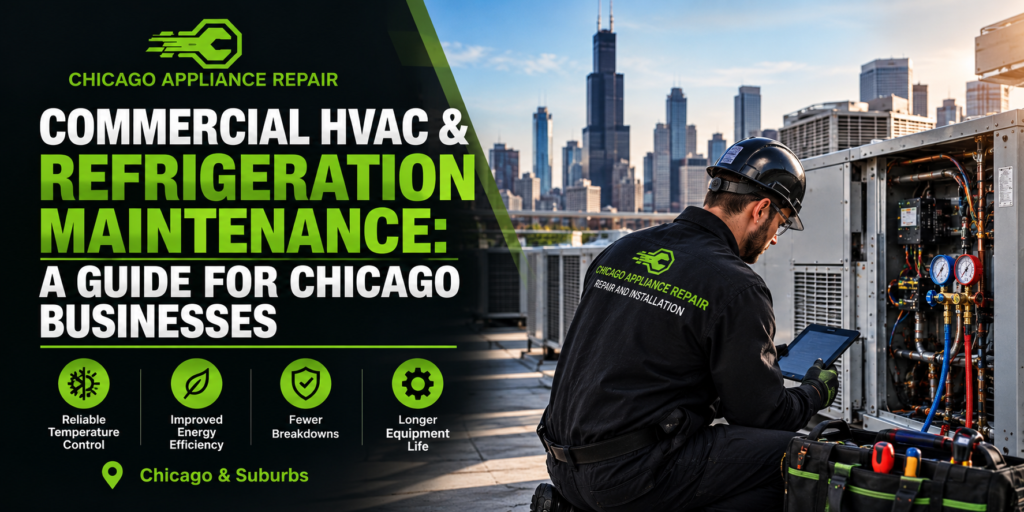
Commercial HVAC and refrigeration maintenance involves routine inspection, cleaning, testing, and adjustment of heating, cooling, ventilation, and refrigeration equipment. For Chicago businesses, regular maintenance can improve system reliability, support efficient operation, reduce unexpected breakdowns, and help protect temperature-sensitive inventory.
Why Is Commercial HVAC and Refrigeration Maintenance Important?
Commercial equipment often works harder than residential equipment. Restaurant refrigerators may operate continuously, while HVAC systems can face long heating or cooling cycles as Chicago weather changes throughout the year.
Preventive maintenance helps technicians identify issues such as restricted airflow, dirty condenser coils, worn belts, faulty controls, damaged seals, and abnormal temperature changes before they lead to major equipment failure.
For food-service businesses, this is especially important. A walk-in cooler that gradually loses cooling capacity can eventually put food inventory at risk.
What Does Commercial HVAC Maintenance Include?
A professional HVAC inspection should look beyond simply changing an air filter. Depending on the equipment, maintenance may include:
- Inspecting filters, coils, fans, belts, and electrical connections
- Checking thermostat and control operation
- Examining airflow and ventilation
- Cleaning components that affect heat transfer
- Looking for unusual noises, vibration, or short cycling
- Checking system performance and temperature
- Identifying worn or damaged components
A technician can also recommend repairs when equipment shows signs of deterioration rather than waiting for a complete breakdown.
If your business is already experiencing inconsistent heating or cooling, see our guide on HVAC installation and repair in Chicago.
How Often Should Commercial Refrigeration Equipment Be Serviced?
There is no single schedule for every business. Service frequency depends on equipment type, workload, operating environment, manufacturer recommendations, and how heavily the system is used.
Restaurants, grocery stores, cafés, bars, and commercial kitchens may need more frequent inspections because refrigeration equipment operates under demanding conditions.
During routine service, technicians should pay particular attention to:
- Condenser and evaporator coils
- Door gaskets and seals
- Refrigerant-related problems
- Fans and airflow
- Drainage and defrost systems
- Temperature controls
- Compressor performance
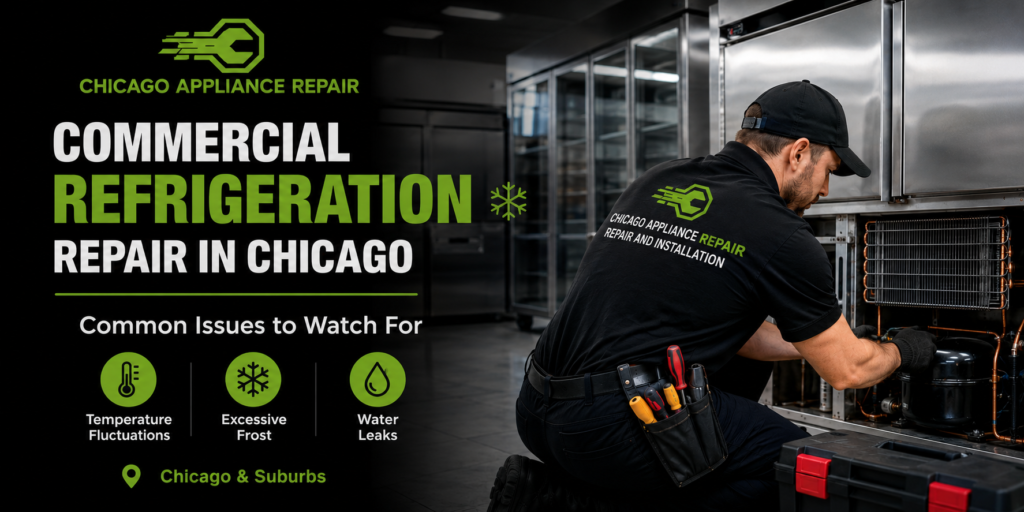
You can also read our related guide, Commercial Refrigeration Repair in Chicago: Common Issues to Watch For, for additional warning signs.
What Are the Signs Your Commercial HVAC or Refrigeration System Needs Attention?
Small performance changes are often easier and less expensive to address than major failures. Watch for:
- Rising or inconsistent temperatures
- Equipment running continuously
- Unusual buzzing, rattling, or vibration
- Excessive frost or ice
- Water around refrigeration equipment
- Weak airflow from HVAC vents
- Frequent cycling or shutdowns
- Unexpected increases in energy consumption
For example, if a restaurant’s walk-in cooler starts running almost constantly but the temperature remains higher than normal, the issue could involve airflow, dirty coils, a door seal, controls, or another component. Continuing to operate the equipment without diagnosis can increase the strain on the system.
Preventive Maintenance vs. Emergency Repair: Which Is Better?
| 🛠️ Preventive Maintenance | 🚨 Emergency Repair |
|---|---|
| Planned around business operations. | Usually happens unexpectedly. |
| Helps identify developing problems before they become costly. | Addresses an existing equipment failure immediately. |
| Can reduce unexpected downtime and extend equipment life. | May interrupt business operations and productivity. |
| Makes maintenance budgeting more predictable. | Costs are often higher and harder to predict. |
| Supports consistent HVAC and refrigeration performance. | Often requires urgent same-day repair service. |
Preventive maintenance does not eliminate every breakdown, but it gives business owners a better opportunity to catch problems early.
What Should Chicago Businesses Do Between Professional Visits?
Business owners and staff can perform simple visual checks without attempting technical repairs.
Keep equipment areas clean and unobstructed, avoid blocking refrigeration air vents, make sure cooler and freezer doors close properly, and monitor temperatures consistently. If employees notice unusual sounds, leaks, frost, odors, or temperature changes, report them promptly.
Do not attempt refrigerant work, electrical repairs, or complex mechanical adjustments without appropriate training. These jobs should be handled by qualified professionals.
Why Choose a Local Commercial HVAC and Refrigeration Company?
Chicago businesses need service providers who understand the demands placed on commercial equipment and the importance of minimizing downtime. A local team can also provide convenient service for businesses throughout Chicago and surrounding suburbs.
Chicago Appliance Repair and Installation provides HVAC, appliance, and commercial refrigeration services for Chicago-area customers.
Frequently Asked Questions
How often should commercial HVAC systems be maintained?
Commercial HVAC systems should be inspected and maintained according to equipment requirements, manufacturer recommendations, operating conditions, and usage. High-use systems may need more frequent attention. Regular professional inspections help identify airflow restrictions, worn components, control problems, and other issues before they develop into larger repairs.
How often should a commercial refrigerator be serviced?
The ideal schedule depends on the refrigerator, workload, environment, and manufacturer guidance. Equipment used heavily in restaurants or food-service operations may require more frequent attention. Regular inspections can help identify dirty coils, damaged gaskets, airflow restrictions, temperature problems, and other developing issues.
What are the signs of a failing commercial refrigeration system?
Common warning signs include inconsistent temperatures, excessive frost, water leaks, unusual noises, constantly running compressors, and poor cooling performance. If food-storage temperatures are rising or the equipment cannot maintain its normal operating range, contact a qualified technician rather than repeatedly adjusting the controls.
Can preventive maintenance reduce commercial HVAC repair costs?
It can help reduce the likelihood of certain expensive failures by identifying worn components and performance problems earlier. Maintenance cannot prevent every breakdown, but catching issues such as restricted airflow, dirty coils, or deteriorating components may reduce unnecessary strain and help extend equipment service life.
What should I do if my walk-in cooler stops cooling?
Keep the door closed as much as possible and check that the unit has power. Avoid repeatedly resetting the equipment without finding the cause. If temperatures continue rising, protect temperature-sensitive inventory using appropriate backup storage and arrange professional commercial refrigeration service promptly.
Is commercial HVAC maintenance worth it for a small business?
Yes. Smaller businesses can be particularly vulnerable to unexpected downtime because they may have fewer backup options. Scheduled maintenance helps identify problems before they interrupt operations and can support more predictable repair and operating costs. The right maintenance plan should match the equipment, workload, and business needs.
Conclusion
Commercial HVAC and refrigeration maintenance is an important part of keeping Chicago businesses comfortable, productive, and operational. Regular inspections can uncover developing HVAC and refrigeration problems before they result in major downtime, spoiled inventory, or costly emergency repairs.
For businesses in Chicago and the surrounding suburbs, combining routine maintenance with prompt professional service is a practical way to protect critical equipment and keep daily operations running smoothly.
If you need emergency commercial refrigeration repair services, please call us directly at (872) 250-4424 to schedule same day appointment.