A commercial HVAC system does much more than keep a building comfortable. It helps control indoor temperature, humidity, ventilation, and air quality for employees, customers, equipment, and inventory. When a system begins struggling, knowing when your commercial HVAC system needs repair can help prevent uncomfortable working conditions, higher energy bills, and expensive equipment failure.
When does a commercial HVAC system need repair?
A commercial HVAC system usually needs professional repair when it shows persistent temperature problems, unusual noises, weak airflow, frequent cycling, water leaks, unusual odors, rising energy costs, or repeated breakdowns. Addressing these warning signs early can prevent a minor component problem from developing into a major system failure, especially during Chicago’s demanding summer and winter seasons.
What are the most common signs your commercial HVAC system needs repair?
1. The building is not maintaining the right temperature
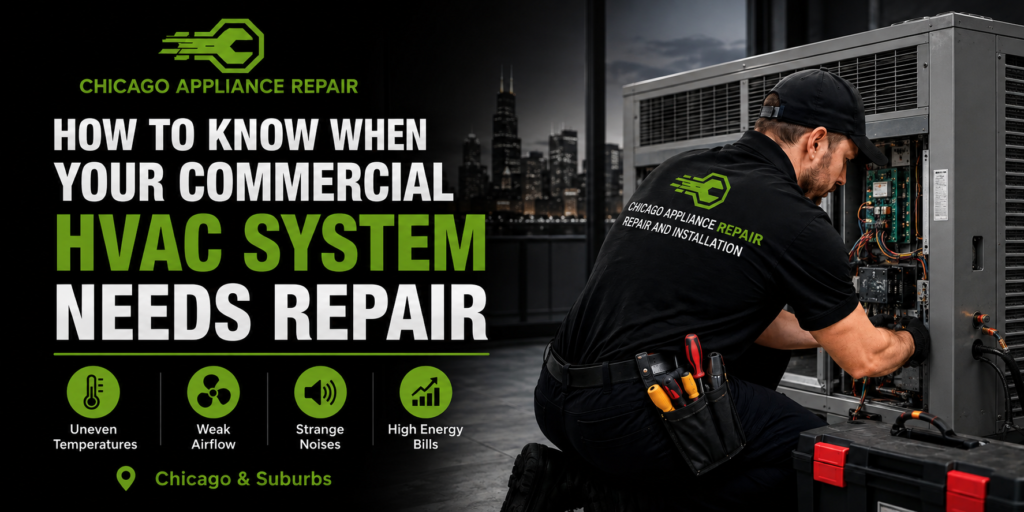
If some areas are too hot while others remain cold, the HVAC system may have an airflow, thermostat, ductwork, blower, or mechanical problem. Uneven temperatures are particularly noticeable in restaurants, offices, retail stores, and larger commercial buildings.
Do not automatically assume the thermostat is responsible. A professional technician can determine whether the issue is related to airflow, refrigerant, electrical components, or the HVAC equipment itself.
2. You hear unusual noises
Commercial HVAC equipment normally produces some operating noise, but sudden or unusual sounds should not be ignored. Grinding, rattling, squealing, buzzing, or banging can indicate loose parts, worn bearings, motor problems, or electrical issues.
A strange noise that appears repeatedly is a good reason to schedule commercial HVAC repair before the affected component causes additional damage.
3. Airflow suddenly becomes weak
Weak airflow from vents can make a commercial space uncomfortable even when the HVAC unit appears to be running. A clogged filter, failing blower motor, blocked ductwork, or other mechanical issue may be restricting air movement.
If changing the filter does not improve airflow, professional diagnosis is recommended rather than continuing to operate a struggling system.
4. Energy bills are increasing without a clear reason
A sudden increase in heating or cooling costs can indicate that an HVAC system is losing efficiency. Dirty components, failing motors, refrigerant problems, restricted airflow, and aging equipment can all force a system to work harder.
For Chicago businesses, monitoring utility costs can provide an early warning that commercial heating and cooling equipment needs attention.
5. The HVAC system turns on and off repeatedly
Frequent cycling means the system is starting and stopping more often than it should. This can result from thermostat problems, restricted airflow, improper system sizing, electrical faults, or other equipment issues.
Ignoring short cycling can place unnecessary stress on compressors, motors, and other components.
6. You notice water, refrigerant, or condensation around the equipment
Moisture around an indoor HVAC unit should be investigated. A clogged condensate drain, damaged component, or other malfunction may cause water to accumulate where it should not.
Refrigerant problems also require professional attention. Refrigerant should never be handled or added by an unqualified person.
Should you repair or replace a commercial HVAC system?
The right choice depends on the equipment’s age, repair history, efficiency, operating condition, and expected remaining service life.
| Situation | Usually Consider |
|---|---|
| Minor component failure | Repair |
| Newer system with isolated problem | Repair |
| Frequent breakdowns | Repair evaluation or replacement |
| Major compressor or heat exchanger failure | Replacement evaluation |
| Very high operating costs | Efficiency assessment |
| Aging equipment with repeated repairs | Replacement planning |
A professional inspection can help you compare the immediate repair cost with the long-term operating cost of keeping older equipment running.
What should you do when your commercial HVAC system shows warning signs?
First, document the problem, including unusual sounds, temperature changes, error codes, and when the issue occurs. Check simple items such as thermostat settings and accessible air filters, but avoid opening electrical panels or attempting complex repairs.
If the problem continues, arrange an inspection with an experienced commercial HVAC technician. For businesses in Chicago and surrounding suburbs, timely service is especially important because extreme outdoor temperatures can put substantial demand on heating and cooling equipment.
Why is preventive HVAC maintenance important for businesses?
Preventive maintenance helps identify worn or failing components before they cause an unexpected shutdown. Regular inspections can also help maintain airflow, system efficiency, indoor comfort, and reliable operation.
For a commercial property, avoiding an emergency HVAC failure can be particularly valuable when poor temperature control could affect employees, customers, equipment, or temperature-sensitive products.
Frequently Asked Questions
How often should a commercial HVAC system be inspected?
Commercial HVAC systems should generally receive professional maintenance at least once or twice a year, although the ideal schedule depends on equipment type, usage, building conditions, and manufacturer recommendations. High-use systems may benefit from more frequent inspections to identify worn components and maintain dependable performance.
How do I know if my commercial HVAC problem is serious?
Persistent temperature problems, burning smells, electrical odors, refrigerant concerns, water leaks, unusual noises, or repeated system shutdowns should be treated seriously. If the HVAC system stops working completely or shows signs of an electrical or mechanical hazard, turn it off when safe and contact a qualified professional.
Can a commercial HVAC system be repaired instead of replaced?
Yes. Many commercial HVAC problems involve individual components that can be repaired or replaced without replacing the entire system. However, frequent breakdowns, major component failures, poor efficiency, and advanced equipment age may make replacement more economical over time.
Why is my commercial HVAC running but not cooling?
A system can run without providing adequate cooling because of restricted airflow, dirty components, thermostat problems, refrigerant-related issues, compressor problems, or other faults. The exact cause cannot be determined from temperature alone, so a professional diagnostic inspection is recommended when the problem persists.
Why does my commercial HVAC system make a loud noise?
Loud grinding, rattling, squealing, buzzing, or banging may indicate a loose part, worn motor or bearing, electrical issue, or another mechanical problem. Because continuing to operate damaged equipment can sometimes worsen the failure, unusual noises should be professionally evaluated rather than ignored.
Is preventive maintenance worth it for commercial HVAC equipment?
Yes. Preventive maintenance can help identify developing problems, maintain system performance, reduce unexpected downtime, and potentially extend equipment life. It is particularly useful for businesses that depend on consistent indoor temperatures and cannot afford an unexpected heating or cooling outage.
Who should repair commercial HVAC equipment in Chicago?
Commercial HVAC repairs should be handled by an experienced, properly qualified HVAC professional familiar with commercial heating and cooling equipment. Businesses in Chicago and the surrounding suburbs should choose a service provider that can diagnose the underlying problem rather than simply replacing parts without identifying the cause.
Conclusion:
Knowing when your commercial HVAC system needs repair allows you to address problems before they become costly emergencies. Uneven temperatures, weak airflow, strange noises, frequent cycling, leaks, unusual odors, and rising energy costs are all reasons to investigate the system. If your Chicago-area business is experiencing persistent HVAC problems, professional diagnosis can help identify the cause and determine the most practical repair solution.
If you need emergency commercial refrigeration repair services, please call us directly at (872) 250-4424 to schedule same day appointment.