Commercial refrigeration equipment plays a critical role in restaurants, grocery stores, convenience stores, cafés, bakeries, bars, and other Chicago-area businesses. When a refrigerator, freezer, or walk-in cooler stops maintaining the right temperature, it can quickly lead to spoiled inventory, lost sales, and operational problems. Commercial refrigeration repair in Chicago can help identify the cause early and restore reliable cooling before a minor issue becomes an expensive emergency.
What are the most common commercial refrigeration problems?
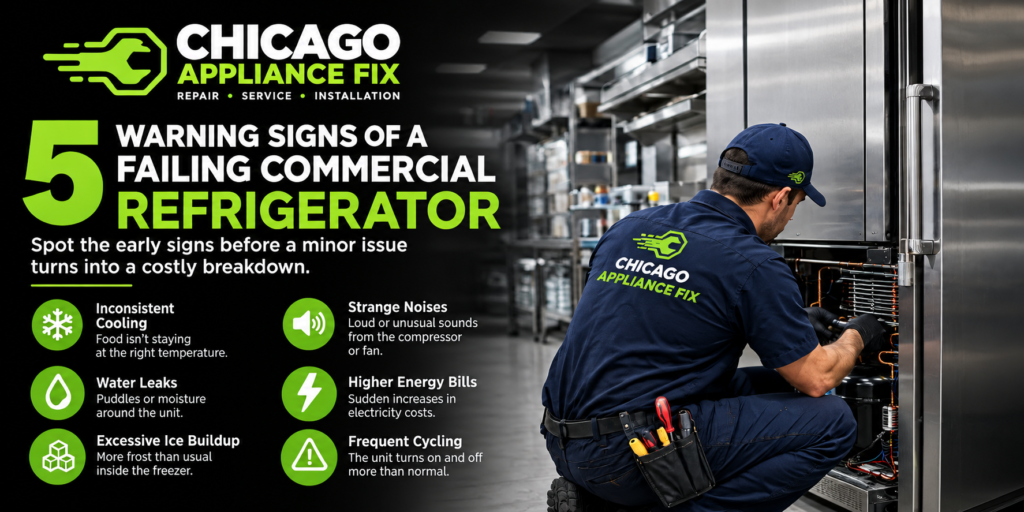
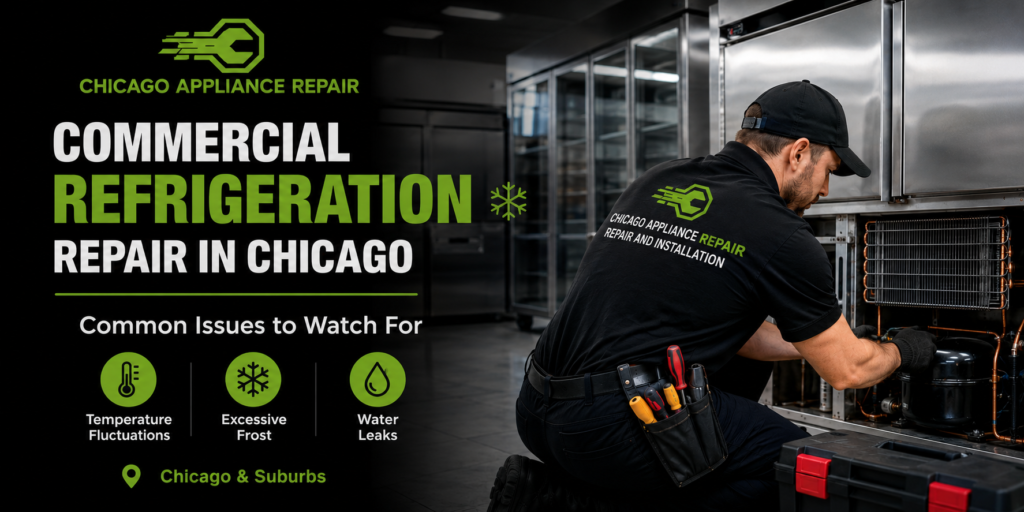
The most common commercial refrigeration problems include temperature fluctuations, excessive frost, unusual noises, water leaks, compressor issues, faulty thermostats, damaged door seals, and restricted airflow. Some problems are relatively simple to correct, while others require professional diagnosis to prevent equipment damage and food-safety concerns.
A commercial refrigerator works continuously under demanding conditions. Heavy usage, frequent door openings, dirty condenser coils, poor ventilation, and normal component wear can all affect performance.
Why is my commercial refrigerator not staying cold?
If a commercial refrigerator is running but not reaching its set temperature, several issues may be responsible. A blocked condenser, failing evaporator fan, faulty thermostat, refrigerant problem, or damaged door gasket can all reduce cooling performance.
Start by checking that the doors close completely and that products are not blocking internal air vents. If the temperature continues rising, have a qualified technician inspect the system rather than repeatedly adjusting the thermostat.
Why is there ice or frost inside my commercial freezer?
A small amount of frost can occur during normal operation, but heavy ice buildup usually indicates a problem with airflow, door sealing, or the defrost system.
Common causes include:
- Worn or damaged door gaskets
- A malfunctioning defrost heater
- Faulty defrost timer or control
- Frequent door openings
- Blocked evaporator airflow
- Moisture entering through an improperly sealed door
Ignoring excessive frost can make the refrigeration system work harder and may eventually reduce its cooling capacity.
What causes a commercial refrigerator to leak water?
Water around a commercial refrigerator or freezer may come from a clogged drain, frozen drain line, blocked condensate system, or defrost-water problem. In some cases, an appliance that is not properly level can also contribute to drainage issues.
A leaking unit should not simply be wiped up and ignored. Standing water can create slip hazards, damage flooring, and indicate a problem that could become more serious.
When should you call for commercial refrigeration repair in Chicago?
Businesses should arrange professional service when refrigeration equipment cannot maintain its required temperature, repeatedly shuts down, produces unusual sounds, leaks water, or develops excessive frost.
Professional commercial refrigeration repair in Chicago is particularly important when:
- Food temperatures are rising
- The compressor runs constantly
- The unit repeatedly trips a breaker
- Cooling is uneven throughout the cabinet
- The freezer develops heavy ice buildup
- Refrigerant-related problems are suspected
- The equipment makes loud or unusual noises
For restaurants and food-service businesses, delaying service can turn a repair into an inventory-loss problem.
How can businesses prevent commercial refrigeration breakdowns?
Preventive maintenance can reduce unexpected failures and help commercial refrigeration equipment operate more efficiently. Regularly cleaning condenser coils, checking door seals, maintaining proper airflow, and monitoring operating temperatures are simple but important steps.
Businesses should also avoid overcrowding refrigerators and freezers. When products block vents, cold air cannot circulate properly, forcing the system to work harder.
A practical maintenance routine should include:
- Check temperatures regularly.
- Inspect door gaskets for cracks or gaps.
- Keep condenser areas clean.
- Make sure ventilation openings remain unobstructed.
- Remove excessive frost promptly.
- Schedule professional inspections when performance changes.
Repair or replace: which is better?
The right choice depends on the equipment’s age, condition, repair cost, energy efficiency, and availability of replacement parts.
| Situation | Usually Consider |
|---|---|
| Minor component failure | Repair |
| Damaged door gasket | Repair |
| Repeated breakdowns | Evaluate replacement |
| Older inefficient equipment | Replacement may make sense |
| Major compressor failure | Compare repair vs. replacement |
| Reliable newer unit | Repair is often practical |
A professional technician can assess the equipment and explain the options rather than recommending replacement automatically.
Why choose a local commercial refrigeration technician?
Chicago businesses face demanding operating conditions and cannot afford prolonged refrigeration downtime. Working with a local appliance repair company provides the advantage of service knowledge across Chicago and surrounding suburbs.
Chicago Appliance Repair and Installation provides appliance repair and installation services for customers throughout Chicago and the suburbs. When commercial refrigeration equipment begins showing warning signs, getting the problem diagnosed early can help protect inventory and reduce unnecessary downtime.
Conclusion
Reliable refrigeration is essential for businesses that depend on safe food storage and consistent operations. From temperature problems and frost buildup to leaks, airflow restrictions, and component failures, recognizing warning signs early can prevent larger problems. For dependable commercial refrigeration repair in Chicago, contact Chicago Appliance Repair and Installation to have your equipment properly inspected and serviced.
Frequently Asked Questions
How much does commercial refrigeration repair cost in Chicago?
The cost depends on the equipment type, failed component, labor required, and extent of the problem. A thermostat or door gasket may be relatively straightforward to replace, while compressor or sealed-system repairs can be considerably more involved. A professional inspection is the best way to determine the actual repair cost for a specific unit.
How do I know if my commercial refrigerator needs repair?
Warning signs include rising temperatures, unusual noises, excessive frost, water leaks, constant compressor operation, and inconsistent cooling. If the refrigerator is struggling to maintain its normal temperature or your products are becoming warmer than expected, professional service should be considered before the problem causes inventory loss.
Can a commercial refrigerator run continuously?
A commercial refrigerator may operate for long periods, especially in a busy kitchen or store, but a compressor that runs constantly can indicate a problem. Dirty condenser coils, poor ventilation, damaged door seals, low refrigerant, or failing components may cause excessive operation. A technician can determine whether continuous operation is normal or a sign of trouble.
How often should commercial refrigeration equipment be serviced?
The ideal maintenance schedule depends on the equipment, operating environment, usage, and manufacturer’s recommendations. High-use equipment in restaurants and busy food-service locations may require more frequent attention. Regular cleaning and inspections can help identify worn components, airflow problems, and other issues before they result in an unexpected breakdown.
What should I do if my commercial freezer stops cooling?
Keep the freezer door closed as much as possible and check whether the unit has power. Avoid repeatedly resetting the equipment without identifying the cause. If temperatures continue to rise, move temperature-sensitive inventory to suitable backup storage when possible and arrange professional commercial freezer repair promptly.
Is it better to repair or replace a commercial refrigerator?
Repair is often sensible when the equipment is relatively new and the problem involves a replaceable component. Replacement may be worth considering when an older unit has repeated failures, poor energy efficiency, or a major system problem. Comparing the repair cost, equipment age, reliability, and expected remaining service life can help determine the better option.
Can a dirty condenser cause refrigeration problems?
Yes. Dust, grease, and debris on condenser coils can restrict heat transfer and make the refrigeration system work harder. This may lead to higher operating temperatures, longer compressor cycles, and reduced cooling performance. Keeping condenser areas clean according to manufacturer recommendations is an important part of commercial refrigeration maintenance.
If you need emergency commercial refrigeration repair services, please call us directly at (872) 250-4424 to schedule same day appointment.